You've got a buzzing nest on your property, and the right response depends entirely on what's in it. Wasps, hornets and bees look similar at a glance but call for very different action — from straightforward removal to serious caution to protected relocation. Here's how to tell them apart in Texas before anyone gets stung.
Bees: the pollinators to protect
Honey bees are fuzzy, amber-and-brown, and rounded, and you'll see them clustered in large numbers around a hive — often inside a wall void, chimney or tree cavity, or as a temporary swarm hanging from a branch. They're focused on flowers, not on you. Because honey bees are valuable, protected pollinators, the responsible response is live removal and relocation, not extermination. Bumble bees are big, round and fuzzy, nest in small numbers in the ground or cavities, and are generally docile. See bee removal.
Wasps: smooth and slender
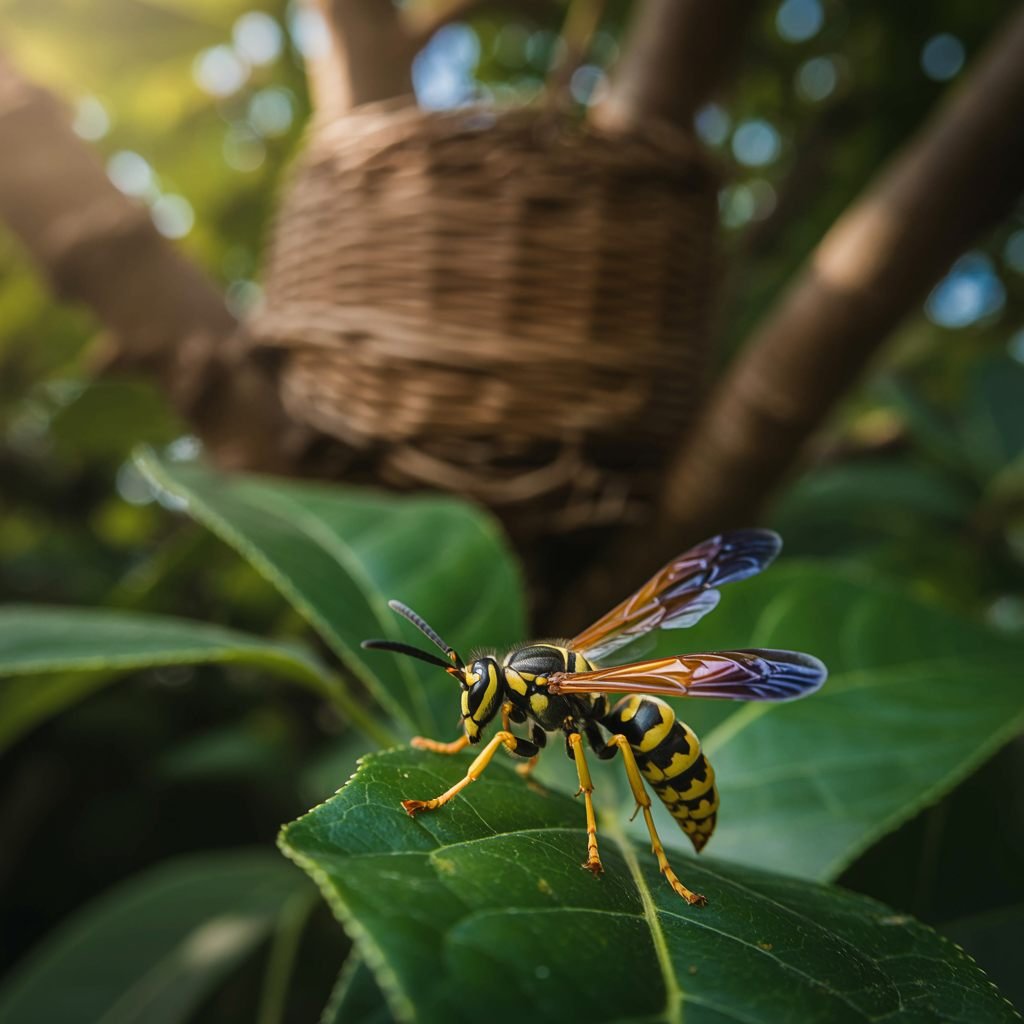
Paper wasps are slim, smooth (not fuzzy), and often reddish-brown or with yellow markings. They build the open, umbrella-shaped combs you see hanging under eaves, railings and in shrubs. They're not usually aggressive unless the nest is disturbed. Yellowjackets are the aggressive ones — bright yellow and black, smooth, often nesting in the ground or in wall voids, with colonies that can hold thousands. A ground nest hit by a lawnmower is a common cause of multiple stings. See wasp & hornet removal.
Hornets: the big, defensive ones
Bald-faced hornets (actually a type of wasp) are large, black and white, and build the big grey “paper football” nests hanging in trees and under overhangs. They're highly defensive within several feet of the nest. Their size and aggression near the nest make them genuinely dangerous to disturb. See hornet control.
| Body | Nest | Response | |
|---|---|---|---|
| Honey bee | Fuzzy, amber-brown | Hive / swarm cluster | Relocate (protected) |
| Paper wasp | Slim, smooth | Open umbrella comb | Remove |
| Yellowjacket | Bright yellow/black | Ground / wall void | Remove (aggressive) |
| Bald-faced hornet | Large, black/white | Grey paper football | Remove (very defensive) |
Why identification matters
Get it wrong and you either destroy a beneficial honey bee colony unnecessarily, or you underestimate an aggressive yellowjacket or hornet nest and provoke a mass-stinging response. Correct ID decides whether the answer is relocation or removal, and how carefully it has to be done. For anyone with a sting allergy in the household, none of these should be a DIY project — a nest by a doorway is a same-day emergency.
Quick answers
Is it a bee or a wasp?
Bees are fuzzy and rounded and focused on flowers; wasps and hornets are smooth and slender. Fuzzy usually means a pollinator worth relocating rather than killing.
What's the most dangerous stinging insect in Texas?
Yellowjackets and bald-faced hornets are the most aggressive near their nests, with large colonies that sting in numbers. Both warrant professional removal.
Should I remove a nest myself?
Not for hornets, yellowjackets, or anything near a sting-allergic person — the nest is often larger than it looks, and disturbing it provokes mass stinging.
Why nest location changes everything
Where a nest is matters as much as what's in it. A paper wasp nest tucked under a rarely-used eave might be left alone; the same nest beside your front door, over the kids' swing set, or by the garage you pass every day is a problem that needs to go. Hidden nests are the dangerous ones — yellowjackets in a wall void or underground, or a hornet nest concealed in dense foliage, because you can stumble into them without warning. A ground nest struck by a lawnmower or a wall-void colony disturbed by vibration produces the mass-stinging incidents that send people to the ER. So when you assess a nest, weigh not just the species but how close it is to where people live, work and play — and never seal a wall-void entrance shut, which traps the colony and drives them inside the house.
Why DIY spray cans so often backfire
The hardware-store wasp spray feels like a solution, but it's where a lot of stings happen. The cans have limited range, so you end up standing close to an agitated nest; they often miss the queen or the hidden portion of the colony, so it rebuilds; and with yellowjackets or hornets, a partial hit triggers the whole nest to defend, sometimes chasing you a surprising distance. For a small, exposed paper-wasp nest early in the season, careful DIY can work — but for anything large, hidden, in a wall or ground, or near a sting-allergic person, professional removal with the right equipment and protection is the safe call. See wasp & hornet removal.
Not sure what's nesting on your property? Send a photo or book a free inspection and we'll identify it and handle it the right way — relocation for bees, safe removal for wasps and hornets.
Dealing with this in your Dallas home?
A free inspection identifies the pest, the entry points and an exact quote — no obligation.