Most homeowners don't call about rodents until they're dealing with an active infestation, not a first sighting — largely because rodents are heard before they're seen. They're nocturnal, cautious, and good at staying out of sight. The evidence, though, shows up early if you know what to look for.
The six signs that matter
1. Scratching or scurrying sounds
In walls, ceilings or the attic, especially at night when roof rats and mice are most active. Overhead noise points to roof rats; wall-level noise to mice. Daytime noise is more likely squirrels.
2. Droppings
Dark, pellet-shaped, found along walls, in pantries, in drawers and behind appliances. Size and shape indicate the species: rice-grain (mice), ½-inch pointed (roof rats), ¾-inch blunt (Norway rats). Concentrations mark travel routes and nest sites.
3. Gnaw marks
On food packaging, baseboards, and — most importantly — wiring. Rodents must chew constantly to keep their teeth from overgrowing, and chewed wiring is your biggest fire-risk indicator.
4. Grease or rub marks
Dark, oily smudges along baseboards and at entry points, left where rodents travel the same path repeatedly. These trails lead back toward the entry point.
5. Nesting material
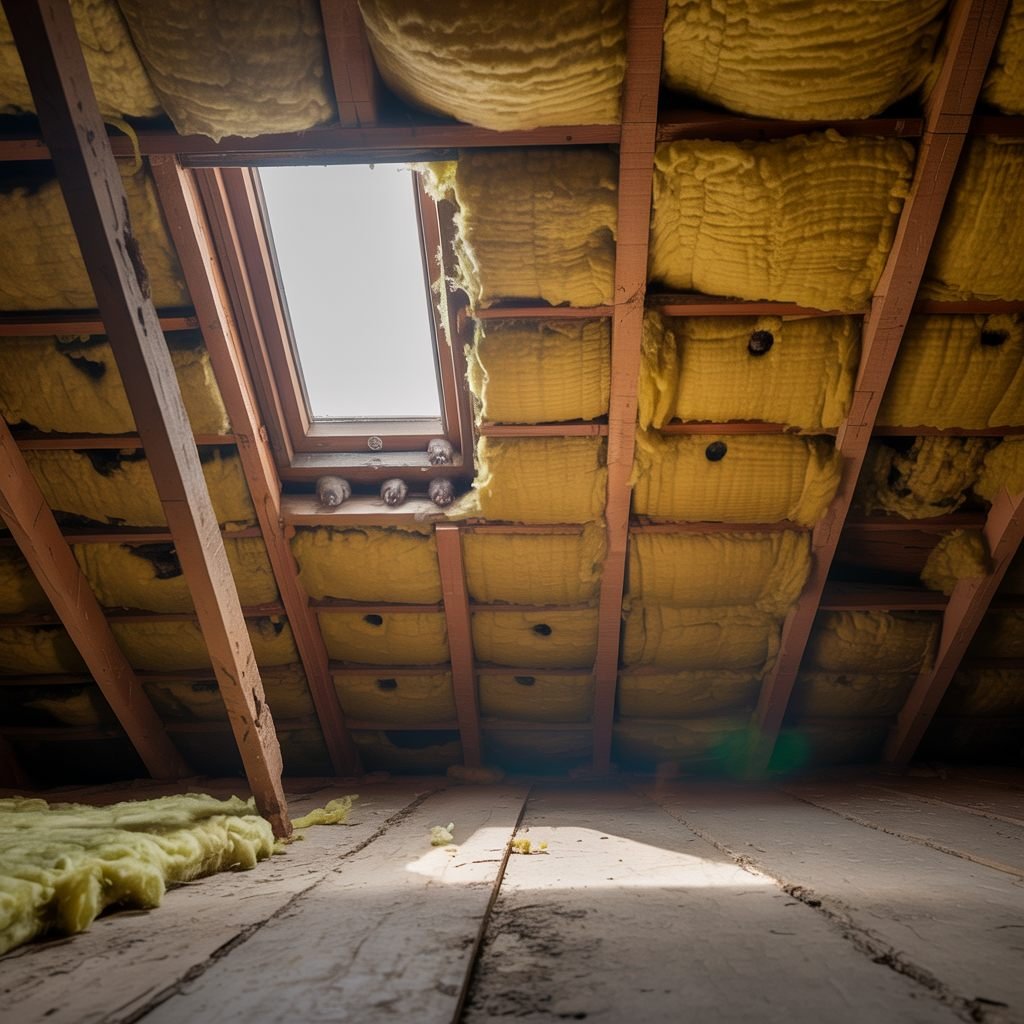
Shredded paper, fabric or insulation gathered into a pile, usually in an attic, garage or wall void.
6. A sudden smell
A persistent ammonia-like odor in an enclosed space is a strong indicator of an active nest.
When it's time to call a professional
If you're seeing rodents more than once a day, hearing regular scratching, or you've found structural damage, that's the point where DIY traps stop being enough. Multiple entry points, an active nest, or repeat sightings all mean an infestation that a hardware-store trap won't fully resolve — because it won't seal every entry point. See DIY vs professional.
A safety note on cleanup
Never sweep or vacuum rodent droppings directly — disturbing dried droppings can release contaminated particles into the air. Soak the area with disinfectant first, let it sit, then wipe or mop. For attic-scale contamination, have it handled professionally. More on the health side: rodent diseases & health risks.
Recognizing any of these signs? Book a free inspection — we'll confirm the species, find the entry points, and quote the fix. Start at the rodent control hub.
Ready for a free inspection?
Tell us what you're seeing. A licensed technician identifies the pest and entry points and quotes an exact price — no obligation.