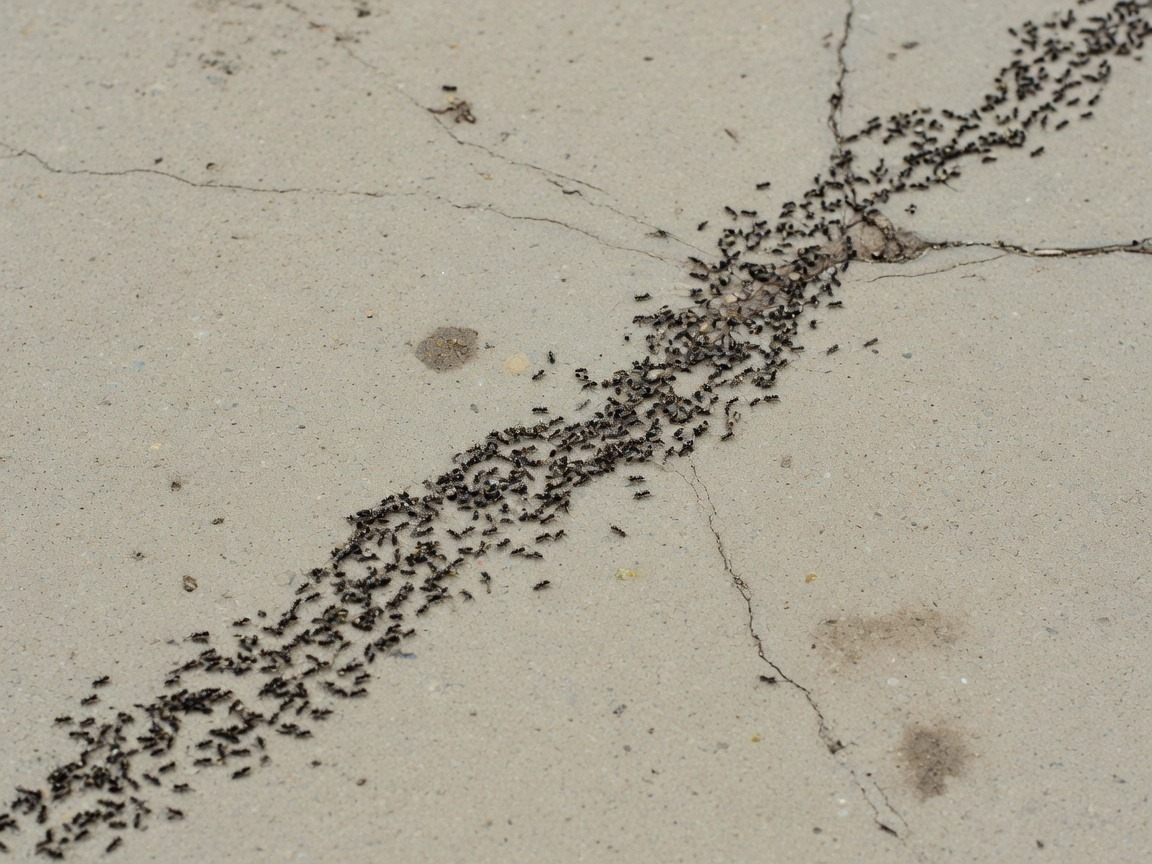
Ants are the most common pest call we get across Dallas–Fort Worth, and the most commonly mishandled. The reason is simple: the ants you see marching across the counter are a tiny fraction of the colony. Spray the trail and you kill the visible scouts while the nest — which can hold tens of thousands of workers and a protected queen — keeps producing. That's why the trail is back in a week.
The ants we treat in Dallas
Fire ants are the signature Texas ant — reddish, aggressive, building dome mounds in sunny yards across DFW. Their sting is painful and, for sensitized people, dangerous. Carpenter ants are large and dark, nesting in moist or damaged wood (often a sign of a hidden leak). Sugar ants — a catch-all for ghost, Argentine and odorous house ants — form the trails to kitchens and pantries that drive people crazy. Each needs a slightly different approach.
Why we bait the colony, not the trail
Our approach uses non-repellent products and targeted baits that foraging ants carry back to the nest, reaching the queen and brood. That's the opposite of a hardware-store repellent spray, which scatters workers and can trigger some species to “bud” — splitting into multiple colonies and making the problem worse. We also fix the conducive conditions (moisture, food access, landscaping touching the house) that invited them in.
The DIY trap: repellent sprays feel effective because the ants vanish for a few days. But you've only removed the scouts and possibly caused budding. Two weeks later there are more trails, not fewer.
Seasonal timing in DFW
Ant pressure surges in spring as colonies wake and rain increases, stays high through the hot summer, and pushes indoors in fall. Because North Texas rarely gets a true off-season, quarterly service keeps colonies from re-establishing rather than fighting one flare-up at a time. See general pest control.
Seeing trails you can't get rid of? Found sawdust that might be carpenter ants? Book a free inspection and we'll identify the species and treat the actual nest.
Ready for a free inspection?
Tell us what you're seeing. A licensed technician identifies the pest and entry points and quotes an exact price — no obligation.