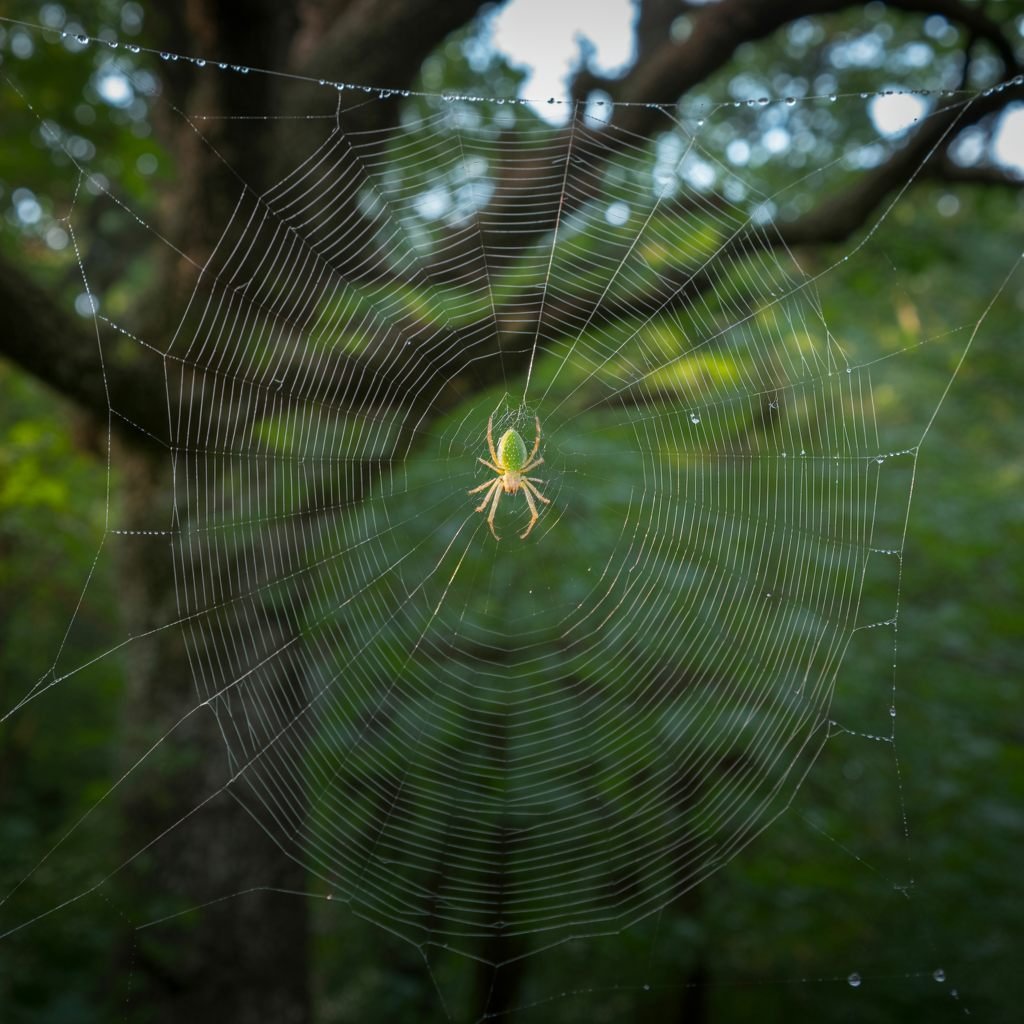
The overwhelming majority of spiders in Dallas are harmless and even helpful — they eat the other insects you don't want. But Texas is home to two spiders that genuinely warrant caution: the brown recluse and the black widow. Knowing how to tell them apart from the harmless ones, and where they like to hide, keeps your family safe without fearing every web in the garage.
The black widow
The black widow is the easier one to identify: a glossy, jet-black body with a distinctive red hourglass marking on the underside of the abdomen. Females (the dangerous ones) are about half an inch. They build irregular, strong, tangled webs — not the neat wheel of a garden orb weaver — in dark, undisturbed spots. In Dallas, look for them in garages, sheds, woodpiles, meter boxes, under outdoor furniture, and in cluttered storage. A widow bite is medically significant, causing muscle pain, cramping and other symptoms, and warrants prompt medical attention — especially in children or older adults.
The brown recluse
The brown recluse is harder to identify and often over-reported. It's light to medium brown, about the size of a quarter with legs, and its key feature is a darker violin-shaped marking on the back behind the head (the “fiddleback”). Unlike most spiders, it has six eyes arranged in three pairs rather than eight. True to its name, it's reclusive — it hides in undisturbed, dry spaces: closets, boxes, stored clothing and shoes, behind furniture, in attics and wall voids. Most bites happen when a spider gets pressed against skin — reaching into a box, or putting on a stored shoe or glove. A recluse bite can cause a slow-healing wound and warrants medical attention.
How to tell them from harmless spiders
Most spiders you'll see — orb weavers in the garden, jumping spiders on the wall, wolf spiders on the floor, common house spiders in corners — are harmless, even if they look alarming. The two danger signs to learn are the black widow's red hourglass underneath and the brown recluse's violin marking and six eyes. If a spider doesn't have those, it's almost certainly one of the beneficial kinds. When in doubt, don't handle it — photograph it and have it identified.
How we handle dangerous spiders
Sensible spider control isn't about eliminating every spider — it's about reducing webs in living areas and specifically targeting the species that matter. We treat the cracks, voids and clutter where widows and recluses hide, de-web eaves and entryways, and cut the insect food supply that draws all spiders in (control the flies, crickets and roaches and the spiders follow). We prioritize the garages, sheds, closets and storage areas where the dangerous species actually live. See spider control.
Prevention
- Declutter garages, closets and storage — fewer hiding spots.
- Store items in sealed bins rather than open boxes.
- Shake out stored shoes, gloves and clothing before use.
- Wear gloves when reaching into woodpiles, sheds or under furniture.
- Reduce exterior lighting that attracts the insects spiders feed on.
Quick answers
How can I tell a brown recluse for sure?
The violin marking behind the head and six eyes in three pairs. Many brown spiders are mistaken for recluses — when unsure, have it professionally identified rather than assume.
Are black widows aggressive?
No — they bite defensively when pressed against skin, which is why garages, woodpiles and stored items are the risk. They're not looking to bite.
Should I be worried about every spider in my house?
No — most are harmless and helpful. Learn the two danger markings, and treat the rest as free pest control.
What to do if you're bitten
Most spider bites in Texas are harmless, but bites from these two warrant attention. For any suspected widow or recluse bite: wash the area with soap and water, apply a cold compress, keep the limb elevated if possible, and seek medical care — especially for a widow bite (which can cause muscle pain and cramping) or a recluse bite (which can develop into a slow-healing wound over the following days). If you can safely capture or photograph the spider, that helps doctors confirm the species. Don't wait to “see how it develops” with these two, particularly for children, older adults, or anyone with symptoms beyond the bite site.
Why spiders show up indoors in the first place
Spiders follow food. If you have widows in the garage or recluses in the closet, it usually means there's an insect population feeding them — crickets, roaches, moths, flies and other prey drawn in by exterior lighting, moisture and gaps around the home. That's actually good news for control: reduce the insects and harborage, and the dangerous spiders lose their reason to stay. This is why our spider work always addresses the broader pest pressure and entry points, not just the spiders you can see. A garage that's decluttered, sealed and free of prey insects is a garage widows leave. See general pest control for the year-round barrier that keeps the whole food chain down.
Finding widows or recluses where your family spends time? Book a free inspection and we'll target them and the harborage they hide in.
Dealing with this in your Dallas home?
A free inspection identifies the pest, the entry points and an exact quote — no obligation.