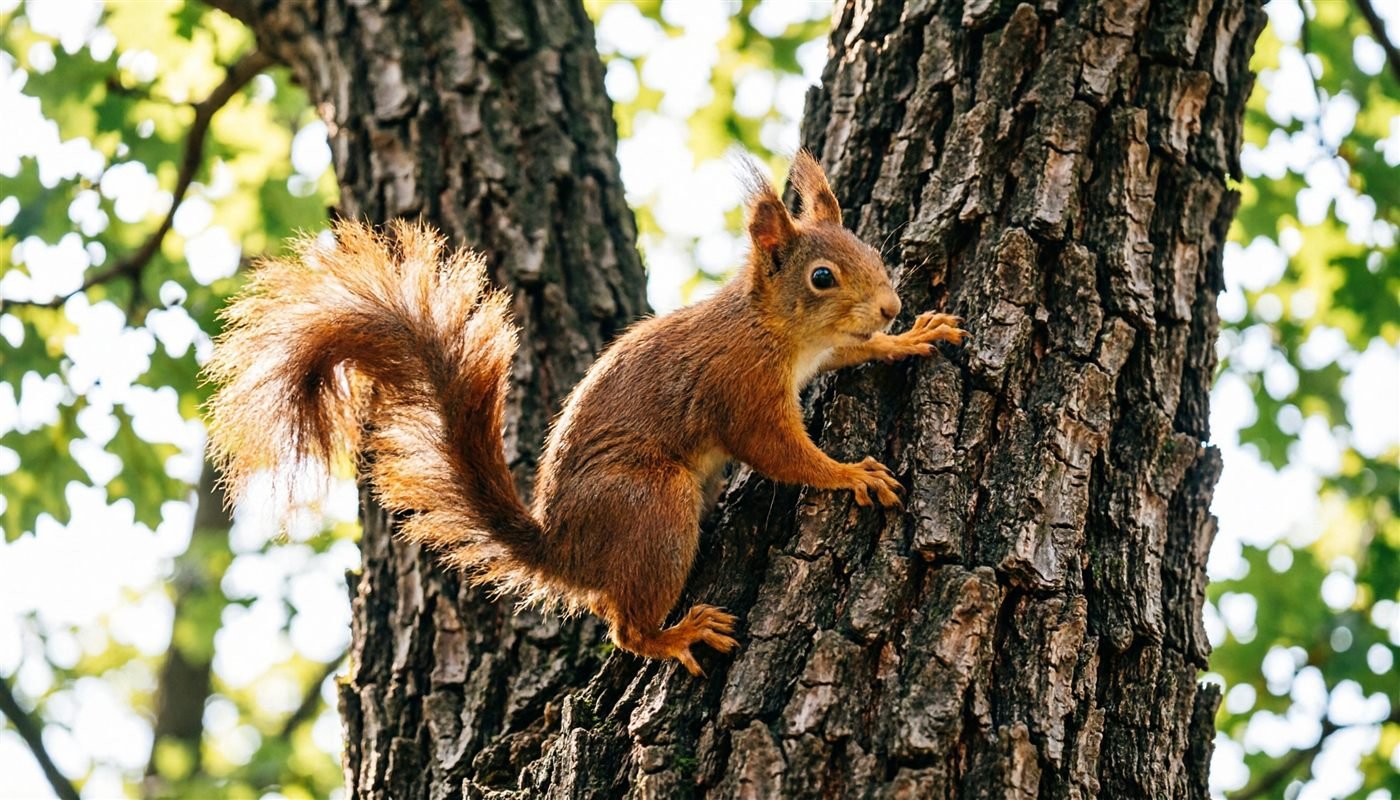
Squirrels are one of the most common attic invaders in Dallas's tree-lined neighborhoods — and one of the most misidentified. If you're hearing scampering overhead, there's a quick way to tell squirrels from rats, and knowing the difference changes how you fix it. Here's what to do, and one important thing not to do.
Squirrels or rats? The daytime test
The fastest tell is time of day. Squirrels are active in daylight — you'll hear scampering and rolling (they cache nuts) in the morning and late afternoon. Rats and mice are mostly nocturnal, so nighttime scratching points to rodents. Squirrels also make heavier, faster movements and leave larger droppings than rats. Getting this right matters, because the entry points and approach differ.
Why squirrels get into Dallas attics
Squirrels are agile climbers, and our mature tree canopy — especially in areas like North Dallas and Lakewood — puts them right at your roofline. They enter through gaps at the soffit, fascia, roof edge, gable vents, and anywhere a tree limb bridges to the roof. Attics are warm, dry and safe, which makes them ideal denning and nesting sites, especially in cooler months and during breeding season.
The damage they do
- Chewed wiring — squirrels gnaw constantly, and chewed wiring is a genuine fire risk.
- Shredded insulation — nesting destroys insulation and reduces efficiency.
- Contamination — droppings and urine in the attic.
- Structural gnawing — on wood framing, vents and stored items.
Sealing is the whole job
Here's the key: removing the squirrels currently in the attic does nothing about the gap they used to get in — and squirrels are strongly site-loyal, returning to the same entry point. Effective removal is trapping or one-way exclusion plus sealing every roofline entry point and trimming the tree limbs that provide access. Skip the sealing and a new squirrel moves in within weeks. See squirrel removal and exclusion.
The one timing mistake to avoid
Do not seal the attic before you're sure there are no dependent young inside. During breeding season, a female squirrel may have babies in the attic. If you seal the entry while she's out foraging, you trap the young inside — which is both inhumane and a serious odor problem when they don't survive. We always check for young before any exclusion, and time the work accordingly. This is exactly why DIY sealing so often backfires.
What you can do now
- Trim tree limbs back from the roof (at least 6–8 feet) to cut the highway.
- Inspect the roofline, soffits and gable vents for gaps and gnaw marks.
- Don't seal anything yet if you suspect young — call for an inspection first.
Quick answers
Are squirrels in the attic dangerous?
The main risks are chewed wiring (fire), contamination and insulation damage. They're not aggressive, but the damage adds up quickly.
Will squirrels leave the attic on their own?
Not reliably, and even if one leaves, an unsealed entry point invites the next. Removal plus sealing is what solves it.
How do I know if there are baby squirrels?
An inspection during breeding season checks for nesting young before any exclusion — critical to avoid trapping them inside.
Squirrel-proofing your roofline: what actually works
Because squirrels are such determined climbers, half-measures don't hold. Effective squirrel-proofing on a Dallas home means sealing every roofline gap with materials they can't gnaw through — steel flashing, heavy-gauge hardware cloth and sealed metal mesh, not foam or plastic vent covers, which they chew open in days. Gable and roof vents get screened from behind; soffit and fascia gaps get closed; and the chimney gets a proper cap. Then comes the part homeowners skip: trimming the trees. Squirrels can jump six to eight feet, so limbs need to be cut well back from the roof, and any “bridge” — a fence line, power line or adjacent tree — has to be considered too. Get the sealing right but leave a branch touching the roof, and they'll simply find the next weak point. This is why professional exclusion is done as a system, not a single patch.
What happens if you ignore it
A squirrel or two in the attic rarely stays that way. They nest, breed, and expand their gnawing — and chewed wiring is the risk that turns a nuisance into an emergency, since it's a documented cause of house fires. Nesting also shreds insulation (raising your energy bills) and contaminates the space with droppings and urine. Acting early, while it's one animal and one entry point, is dramatically cheaper and cleaner than dealing with an established family and the damage they leave behind. See squirrel removal.
Hearing daytime scampering overhead? Book a free inspection and we'll confirm squirrels vs rats, check for young, and seal the roofline for good.
Dealing with this in your Dallas home?
A free inspection identifies the pest, the entry points and an exact quote — no obligation.