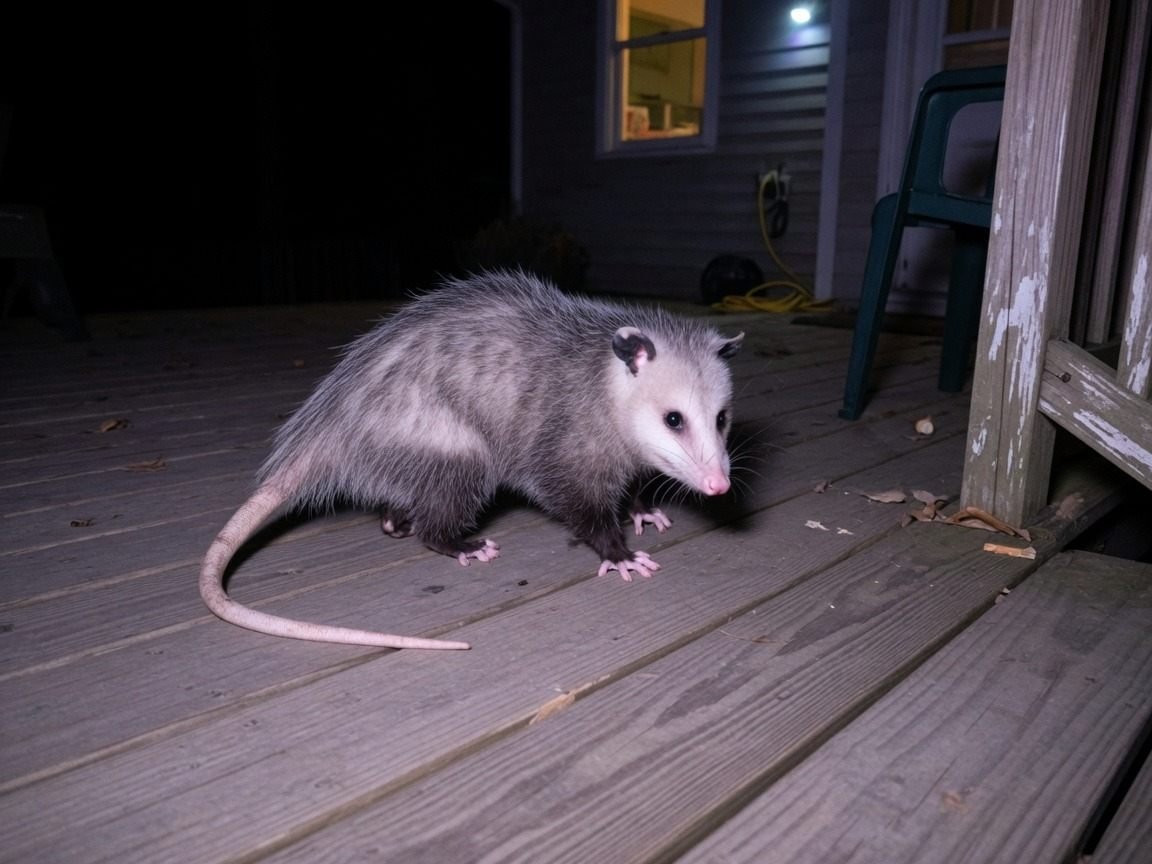
You flip on the porch light and there's an opossum on your deck, hissing, mouth open, looking every bit like trouble. It's a common Dallas encounter, and it raises a fair question: are opossums actually dangerous? The honest answer is reassuring — they're mostly beneficial and rarely aggressive — but there are real reasons you don't want one living under your home.
The good news about opossums
Opossums are North America's only marsupial, and they're genuinely useful animals. A single opossum can eat thousands of ticks in a season, along with cockroaches, rodents, snakes, slugs and carrion. They're also highly resistant to rabies — their body temperature is too low for the virus to thrive — so the rabies risk people worry about is very low. That threatening hiss-and-gape display? It's mostly bluff. When truly cornered, opossums “play possum” — going limp and still — rather than attacking. They're not looking for a fight.
So why not just leave it alone?
Because “beneficial in the neighborhood” and “living under your deck” are two different things. Here's where opossums become a real problem:
- Denning under structures — decks, porches, sheds, crawl spaces and (through roofline gaps) attics, leaving droppings, odor and mess.
- Secondary pests — fleas and ticks travel on them and can move into your home and onto pets.
- Droppings and health — accumulated waste in a den area carries health considerations, and opossums can transmit certain diseases to pets.
- Conflict with pets — a cornered opossum near dogs or cats can lead to bites and vet bills, even if it would rather flee.
The right way to handle one
Because opossums are beneficial, the goal is humane removal and exclusion — relocating the animal away from your structure and sealing the space so the next one can't move in — not extermination. Our approach:
- Inspection — confirm the animal, find the den and entry points, and check for young (opossum mothers carry babies).
- Humane removal — live trapping or one-way exclusion, handled to keep mothers with dependent young.
- Exclusion — sealing off under-deck, crawl-space and roofline access so it can't be reoccupied.
- Cleanup & deterrence — removing waste and addressing the food sources (pet food, garbage) that attracted it.
See opossum removal.
How to keep opossums away
- Don't leave pet food outside overnight.
- Secure garbage cans with tight lids.
- Pick up fallen fruit and clean up around bird feeders.
- Seal gaps under decks, sheds and porches before something moves in.
Quick answers
Will an opossum attack my dog?
Opossums avoid conflict and usually flee or play dead, but a cornered one can bite in self-defense. Keep pets away and let it leave, or have it removed.
Do opossums carry rabies?
Very rarely — their low body temperature makes them poor hosts for the virus. Other diseases and the fleas/ticks they carry are the bigger practical concern.
Should I relocate an opossum myself?
Better not to — there are legal and humane considerations (especially with young), and DIY trapping often separates mothers from babies. Professional removal handles it properly.
Opossum, raccoon or skunk? Know your Dallas wildlife
Not every nighttime visitor under your deck is an opossum, and the difference matters because raccoons and skunks bring bigger risks. Raccoons are stronger and more destructive — they tear into soffits and attics, are a genuine rabies vector, and their droppings can carry roundworm; a raccoon in the attic is a more urgent situation. Skunks den under decks and sheds too, and beyond the obvious spray, they're another rabies consideration. Opossums, by contrast, are the least dangerous of the three — low rabies risk, non-aggressive, and beneficial. If you're not sure which you have, the tracks, droppings and damage tell the story, and an inspection settles it. The removal and exclusion approach is similar across all three: get the animal out humanely, then seal the den so nothing else moves in. See opossum removal and our broader rodent and wildlife work.
Why sealing under the deck matters
Once one animal dens under your deck, porch or shed, the spot becomes attractive to the next one — the scent lingers and the shelter is proven. That's why removal without exclusion is only half a solution. Sealing the gaps under decks and outbuildings with buried, reinforced barriers keeps opossums, skunks and stray cats from turning the space back into a den. It's the same principle as rodent exclusion: close the opportunity, not just deal with the current occupant.
Got an opossum denning under your deck or in the attic? Book a free inspection and we'll remove it humanely and seal the space for good.
Dealing with this in your Dallas home?
A free inspection identifies the pest, the entry points and an exact quote — no obligation.