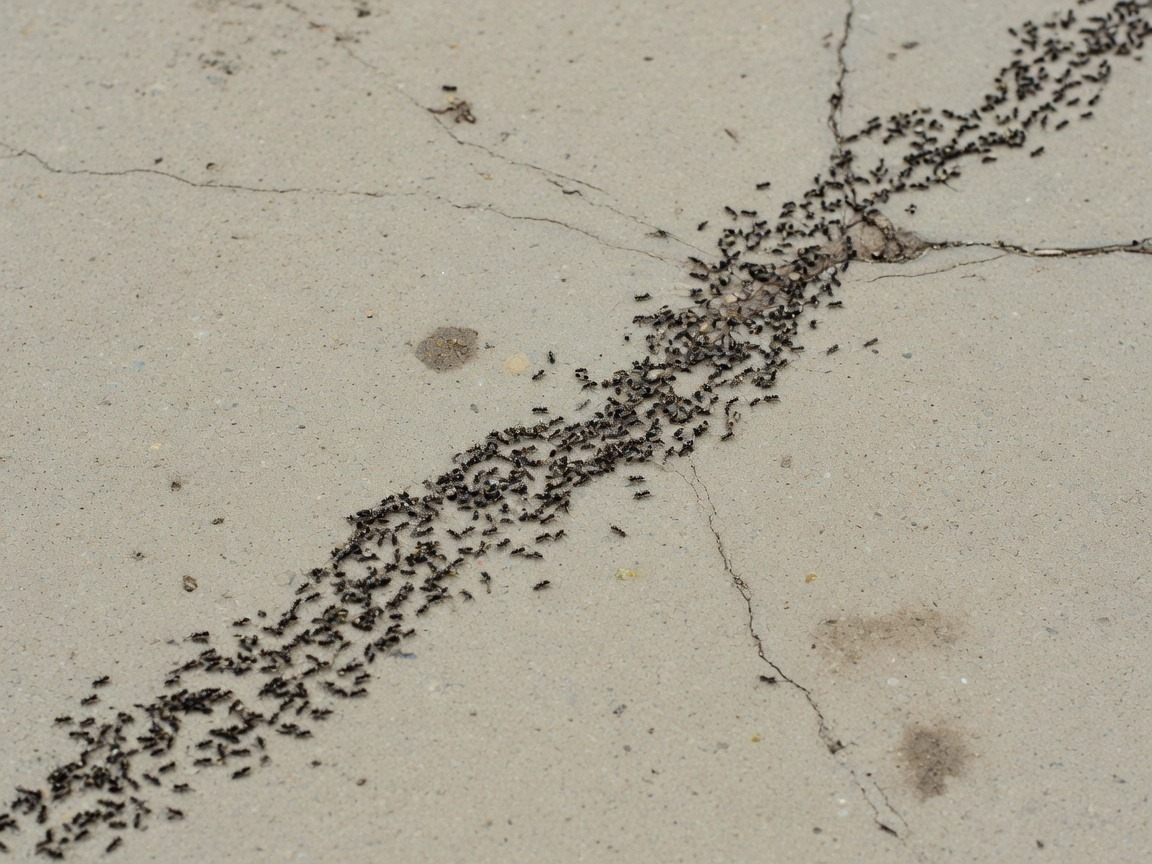
Fire ants are the most hated yard pest in Texas, and for good reason: the mounds are everywhere, the stings hurt, and the moment you knock one down, more appear. If you've been fighting a losing battle with store-bought mound killer in your Dallas yard, the problem isn't your effort — it's the method. Here's what actually clears fire ants and keeps them gone.
Why single-mound treatments don't work
When you pour treatment on a visible mound, you kill some workers on the surface — but the queen, protected deep in the colony, keeps laying, and disturbed colonies simply relocate and rebuild a few feet away. Some products even cause the colony to split (“bud”) into multiple mounds, making your yard worse. The mound you see is only the tip; the colony extends well below it. Killing what's on top never reaches the source.
The two-step approach that clears a yard
Effective fire ant control in Dallas combines two things:
- Broadcast bait across the whole yard. Foraging ants carry the bait back and feed it to the colony — including the queen. This is the step that eliminates colonies rather than scattering them.
- Targeted mound treatment on active mounds for faster knockdown where you need it now (near patios, play areas, walkways).
Used together, on a schedule, this breaks the cycle. A one-time treatment helps for a season, but because North Texas fire ants are relentless and re-invade from neighboring yards, ongoing quarterly service is what keeps a yard usable long term. See our full ant control page.
Why Dallas yards get so many fire ants
Imported fire ants thrive in the warm, sunny, open lawns common across DFW. They build in disturbed soil, along driveways and sidewalks, in flower beds, and even inside electrical boxes and irrigation equipment. Our long warm season means they're active most of the year, and after heavy rain they push up new mounds fast. New subdivisions built on former open land — think Frisco, McKinney, Allen — often have especially heavy fire ant pressure.
Are fire ants dangerous?
For most people a sting is a painful welt that turns into an itchy white pustule. But fire ants sting in groups and inject venom, and for people with allergies a mass-stinging event can be a medical emergency. Mounds in a yard where children or pets play are a genuine hazard, not just a nuisance — which is why getting ahead of them matters.
What you can do between treatments
- Don't disturb mounds — it triggers relocation and stings.
- Reduce moisture: fix leaky spigots and over-watering that draw them in.
- Keep an eye on sunny, open areas and mulch beds where they prefer to build.
- Clear away debris and clutter that offers shelter.
Quick answers
Does club soda or grits kill fire ants?
No — these popular home remedies don't reach or kill the queen. Bait that foragers carry back to the colony is what works.
How long until fire ants are gone?
Baiting works over a few weeks as the colony consumes it. Mound treatments give faster surface knockdown. Ongoing service prevents re-invasion.
Will fire ants come back?
They re-invade from surrounding properties, which is why one-time treatment fades. A seasonal plan keeps your yard protected against new colonies moving in.
Fire ants damage more than skin
Most people think of fire ants purely as a stinging nuisance, but in Dallas they cause real property headaches too. They're strangely attracted to electrical equipment — air-conditioner units, pool pumps, irrigation controllers, junction boxes and even outdoor outlets — where they nest, chew insulation and cause shorts and failures. A colony in your AC condenser or sprinkler valve box is a repair bill waiting to happen. They also damage lawns and garden beds, and their mounds pop up fast in the disturbed soil of newer subdivisions. This is part of why treating the whole yard, not just the mounds near the patio, pays off — you're protecting the equipment and the lawn, not only your ankles.
Fire ants after Dallas rain
Ever notice the mounds explode after a storm? Heavy rain floods fire ant colonies, and they respond by pushing up fresh mounds and, remarkably, forming floating “rafts” of live ants to survive the water — which is one way they spread to new parts of your yard. That's why fire ant pressure spikes in our wet spring and after summer downpours, and why a yard that looked clear can sprout a dozen mounds overnight. A standing seasonal treatment keeps the bait working through those surges instead of leaving you to react mound by mound. See ant control and our seasonal pest guide.
Tired of stinging mounds taking over your yard? Book a free inspection and we'll set up a fire ant plan that treats the colony, not just the mound you can see.
Dealing with this in your Dallas home?
A free inspection identifies the pest, the entry points and an exact quote — no obligation.